
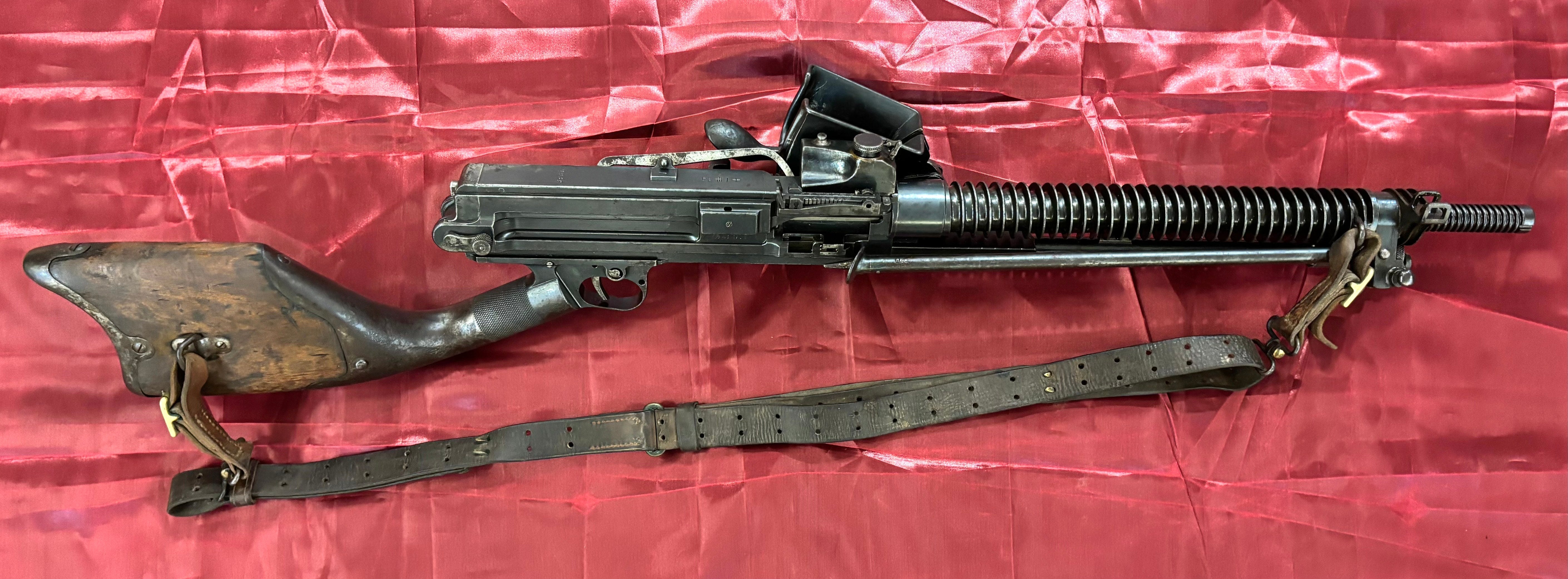
Type 11 Light Machine Gun LMG
This week for Firearm Friday it’s Light Machine Gun time!, and we are looking at the Japanese Imperial Armies first ever LMG. the infamous Type 11!.

The Type 11 light machine gun “Jyūichinen-shiki Kei-kikanjū” was a light machine gun used by the Imperial Japanese Army in the interwar period and during World War II. Adopted as the Imperial Japanese Army's first light machine gun, the Type 11 was designed by Kijirō Nambu and had certain similarities to the Hotchkiss series of machine guns. It had an unusual feed system which required five round clips to be dropped into a hopper, this held up to a total of six clips and each round was oiled as it was fed into the chamber. Despite good overall performance, this feed system was prone to collect dirt and grit which would jam the weapon while in use.

Combat experience in the Russo-Japanese War of 1904–1905 had convinced the Japanese of the utility of machine guns in providing covering fire for advancing infantry. This was reinforced by first-hand observations of European combat tactics by the Japanese military during the First World War. The resultant "Type 11 light machine gun" (named after the 11th year of the reign of Emperor Taishō) was the first light machine gun to be mass-produced in Japan and the oldest Japanese light machine gun design to see service in the Pacific War. It was superseded by the Type 96 light machine gun in 1936.

The Type 11 light machine gun was a design by famed arms designer Kijirō Nambu, based on a modification of the French Hotchkiss M1909 Benét–Mercié machine gun. It was an air-cooled, gas-operated design, using the same 6.5×50mm Arisaka cartridges as the Type 38 infantry rifle.

The Type 11 was innovative but also flawed. Its gravity-fed hopper system was theoretically sound in simplifying logistics but had a number of drawbacks:
Jamming and reliability issues were common, especially if the gun was tilted or jarred during use.

The open hopper design left rounds vulnerable to dirt and debris, especially in harsh field conditions like those in China, the Philippines, or the Pacific Islands.

The 6.5mm cartridge lacked stopping power compared to Western counterparts like the .30-06 or 7.92×57mm Mauser.

The gun featured a quick-change barrel, and a bipod was integrated into the front end, allowing the gun to be deployed from the prone position. However, its weight and awkward feeding system made it less mobile and slower to reload than its contemporaries.
The Type 11 was used extensively during the Second Sino-Japanese War, and into World War II. It was intended to serve as a squad-level automatic weapon but was quickly overshadowed by its successors—the Type 96 and later Type 99 light machine guns, both of which addressed many of the Type 11’s flaws.
Nevertheless, the Type 11 remained in use through the early and mid-war years, particularly among second-line units or in rear-echelon roles. Its presence was noted in campaigns across China, Southeast Asia, and the Pacific, though frontline troops often preferred to replace it when possible.

In retrospect, the Type 11 stands as a symbol of early interwar innovation hampered by practical limitations. Its concept of using shared rifle ammunition and stripper clips for feeding was ahead of its time in terms of logistics but ultimately compromised reliability and performance. The Japanese military learned from the Type 11’s shortcomings, leading to improvements in their later light machine gun designs.

Today, surviving examples of the Type 11 are rare and mostly found in museums or private collections. It remains a curious artifact of early 20th-century military thinking—both ambitious in scope and flawed in execution.

We have our Type 11 on display in the museum everyday as well as a Type 96 to show what came after, we are reorganising a display for some of these more “modern” repeating designs so keep an eye out on your next visit!.

Related Posts

Heckler & Koch 630

Smith & Wesson Model 52

Evans Carbine Rifle

THE BROWNING AUTO-5: A SHOTGUN, A WEDDING & OUR VERY OWN BONNIE AND CLYDE.

Winchester 73 "The Daisy Rifle"

London Small Arms NO1

Freedom Arms Model 83


